Crack Filling & Sealing in Shreveport, LA
The cheapest dollar you can spend on an aging Shreveport driveway or lot — hot-poured rubberized sealant that stops storm water before it reaches the base.
Get My Free Crack-Fill Estimate (318) 610-7967Crack Filling & Sealing in Shreveport, LA
A1 Asphalt Shreveport fills and seals cracks in driveways and parking lots across Shreveport and the Ark-La-Tex. A surface crack that looks cosmetic is actually an open pipe directing storm water into the base of your pavement. In a market that gets 50 inches of rain a year, that's how a hairline crack becomes a sinkhole. We rout cracks to a clean reservoir, blow them out, and fill with hot-poured rubberized sealant that flexes with seasonal movement and bonds to the asphalt walls. Call (318) 610-7967 for a free estimate.
Why Cracks Matter More in Shreveport Than You'd Think
A crack in asphalt is rarely just a surface problem. Water runs down the crack during a storm, saturates the aggregate base underneath, and over time washes fines out from under the surrounding pavement. The unsupported asphalt around the crack then deflects under load, the crack widens, and eventually the surface fails. In freeze-thaw markets, that process is accelerated by ice expansion — but in Shreveport, it's accelerated by sheer volume of rainfall and the shrink-swell behavior of the red-clay subgrade. A 1/4-inch crack that ignores a Gulf-storm season can become a 3/4-inch crack with raveled edges by the following spring. Sealing it when it's small is a $200 job. Letting it run is a $2,000 patch — or eventually a $5,000 section rebuild. The math is straightforward.


Request a Crack-Fill Estimate
Limited Slots Available This Month!
Routing, Cleaning, and Why Cold-Pour Sealant Doesn't Work Here
Most failed crack fills weren't routed. Pouring sealant into a tight crack without first creating a reservoir gives the sealant nothing to bond to and no room to flex. We use a crack router to widen and deepen cracks to roughly 1/2 inch by 1/2 inch — enough volume to hold sealant material and enough wall area for proper adhesion. Cracks are then cleaned with high-pressure air to remove dust, vegetation, and moisture; sealant doesn't bond to dirty walls. We use hot-poured rubberized sealant heated to manufacturer spec (typically around 380°F), poured at temperature so it flows into the reservoir and bonds chemically to the asphalt walls as it cools. Cold-pour squeeze-bottle products from a hardware store are for emergency use only — they don't bond, don't flex, and fail within a season under Shreveport's heat and rainfall. Hot-pour, properly applied, lasts 5 to 7 years.
When Crack Filling Is the Right Move vs. When It Isn't
Crack filling is the right move when cracks are isolated, when they're not yet branching into alligator patterns, and when the surrounding pavement is structurally sound. If you can stand on the surface, look down at a network of cracks, and see daylight between the segments, the base has already failed and crack fill is just decoration. In those cases we recommend surface or full-depth repair instead, depending on how deep the damage goes. Crack filling also has a coverage threshold: above roughly 20 percent of the surface cracked, the cost-effective move is resurfacing, because at that crack density the labor of routing and filling each one exceeds the cost of milling and overlay. We tell people honestly which side of that line their surface sits on.
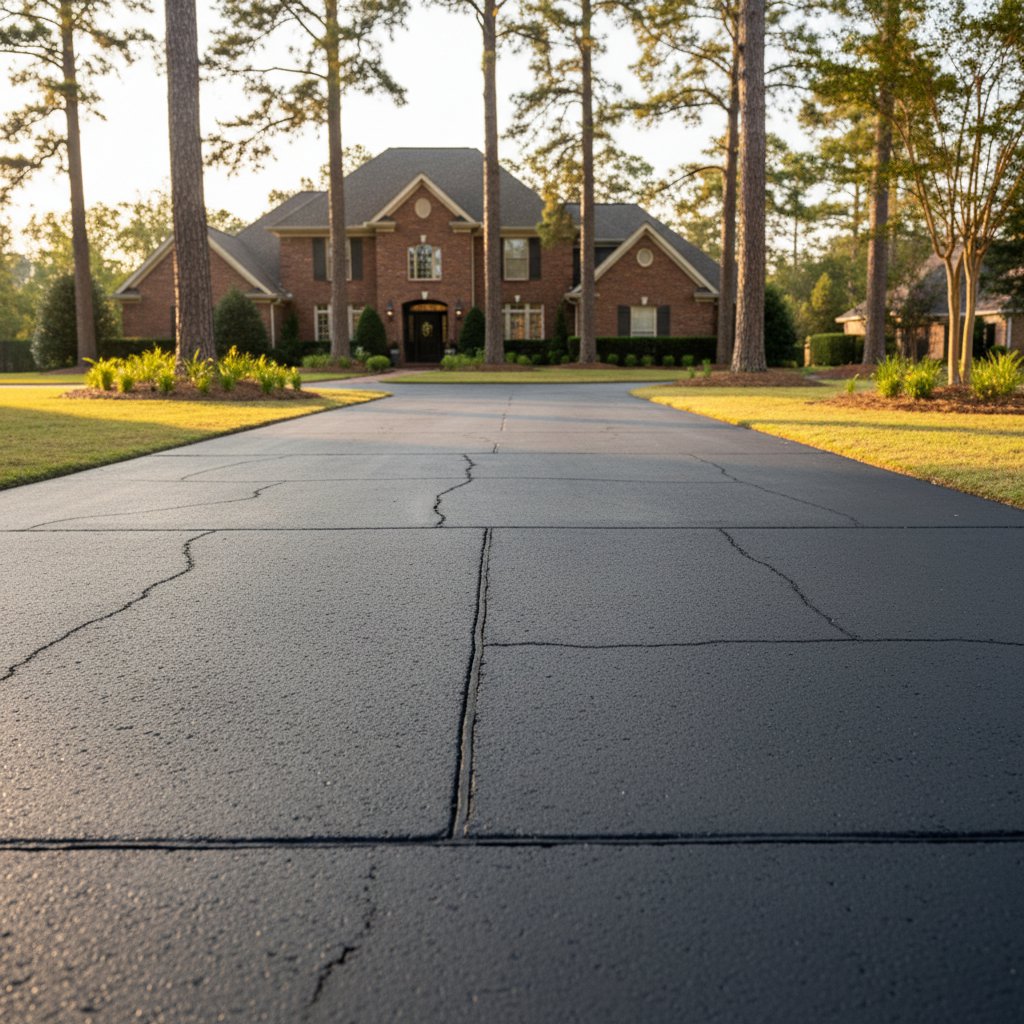
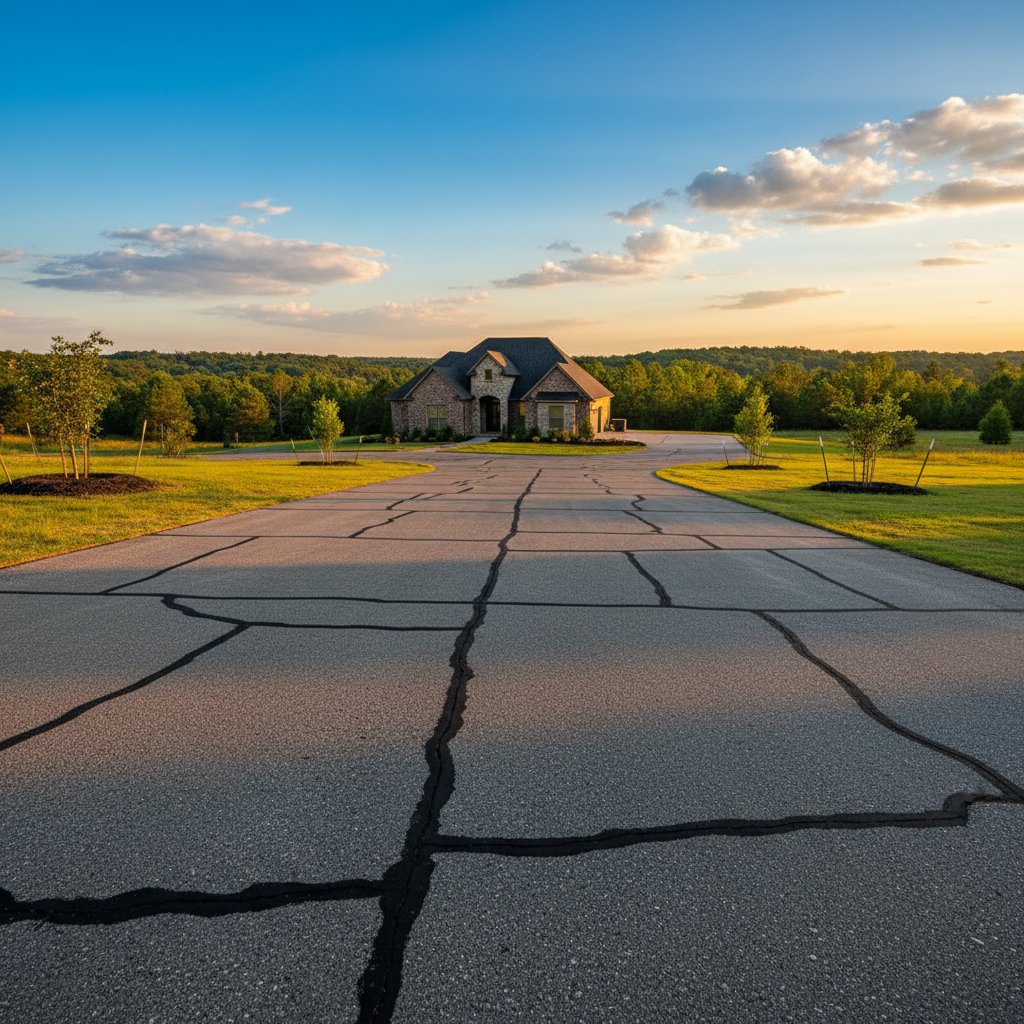
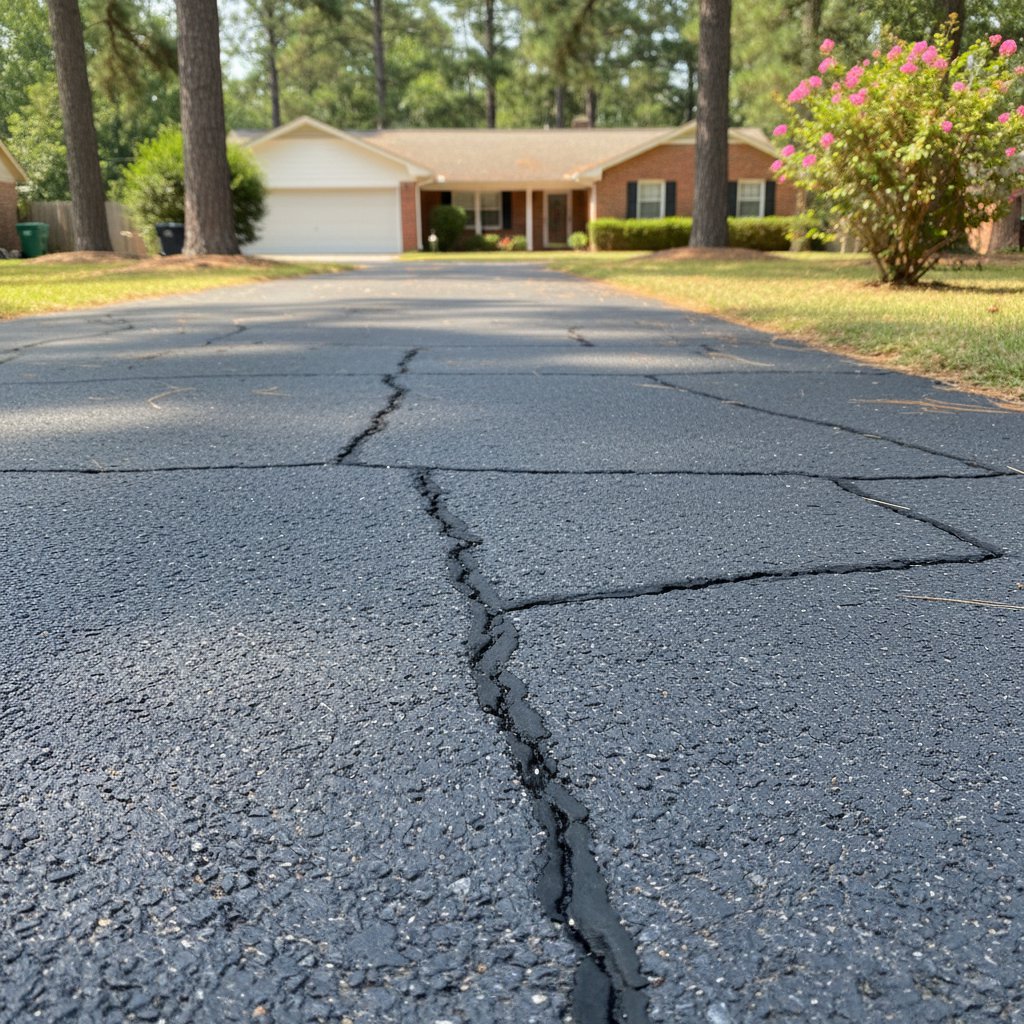
Recent Crack-Fill Projects in Shreveport
Signs Your Pavement Needs Crack Filling
Don't wait. These are the conditions where a same-month crack fill saves you a same-year repair.
Visible Cracks Wider Than a Pencil
Cracks at 1/8 inch or wider are letting water through. Route, clean, and fill before they widen into structural failure.
Edges Crumbling Around Existing Cracks
Loose aggregate along crack edges means the walls are breaking down. Route to fresh asphalt and seal before more is lost.
Cracks Running With Storm Drainage
Cracks aligned with how water flows across the surface are the highest-priority fix. Water is running into them with every rain.
It's Been Three Years Since the Last Fill
Even hot-pour sealant has a lifespan in Louisiana heat. Inspect and refill every 3 to 5 years to keep the surface tight.
How We Fill Cracks
Four steps that turn an open crack into a sealed, flexible joint.
Inspect and Map
We walk the surface, mark cracks for treatment, and identify any areas where the damage has progressed past crack fill.
Rout to Reservoir
Cracks are widened with a crack router to roughly 1/2-inch by 1/2-inch to create a sealant reservoir with clean walls.
Clean and Heat-Pour
High-pressure air clears dust and moisture, then hot-poured rubberized sealant is applied at manufacturer-specified temperature.
Squeegee and Cure
Sealant is squeegeed flush with the pavement surface, cured to traffic-ready, and inspected before we leave the site.
What Our Clients Say
"Our driveway off Line Avenue had been graying and raveling for years — sun had cooked the binder out of it. They patched the base where water was pooling near the garage, laid a fresh surface, and sealcoated it the right way. Two summers in and it still looks new."

Ready to Seal Those Cracks?
Get a free written estimate from a contractor that fills cracks the right way — routed, cleaned, hot-poured, and warranted. The least expensive maintenance you can do, with the highest ROI.