Asphalt Driveway Paving in Shreveport, LA
New residential driveways from the base up — proper grading, hot-mix asphalt, hand-formed edges, and a finish that holds up to Louisiana summers.
Get My Free Driveway Estimate (318) 610-7967Asphalt Driveway Paving in Shreveport, LA
A1 Asphalt Shreveport paves residential driveways across Shreveport and the surrounding parishes. A driveway is the first thing a visitor sees and the last thing a homeowner wants to think about — which is why we build them to last. Proper grading, a compacted aggregate base, and a tight hot-mix wearing course laid at temperature. Call (318) 610-7967 for a free on-site measurement and a written estimate that itemizes the base depth, mix type, and timeline.
What a Shreveport Driveway Actually Has to Survive
A residential driveway in Shreveport faces a different set of stresses than a parking lot. The traffic load is light — passenger vehicles, the occasional truck — but the surface is exposed to direct sun all summer, and the binder is what UV is trying to break down. By the time a driveway looks gray instead of black, oxidation has already started leaching flexibility out of the surface. Combine that with the red-clay subgrade common across South Highlands, Broadmoor, and Highland — clay that swells in wet weather and shrinks in dry — and you have constant minor base movement working against any pavement that wasn't built right. Our driveway specs reflect that reality: a 4- to 6-inch compacted aggregate base over properly graded sub-grade, then a 2-inch compacted lift of hot-mix surface course. Edges are formed by hand to a clean line, and the surface is pitched to shed water away from the garage, the foundation, and any low spot where it could pool.


Request a Driveway Estimate
Limited Slots Available This Month!
Mix Depth, Compaction, and the Difference It Makes
Cheap driveways skip on base depth, mix tonnage, and roller passes — and they look fine for a year. By year three the surface is raveling, the edges are crumbling where compaction was inadequate, and cracks are running diagonally across the surface where the base shifted. A properly paved driveway gets the full base depth, hot mix delivered at temperature, and compaction completed before the mat drops below 175°F. We pave with LADOTD-spec mix from local plants, run a vibratory roller through breakdown, intermediate, and finish passes, and hand-work the edges so the perimeter is as dense as the middle. The result is a surface that compacts to design density across the entire driveway — including the corners where most paving fails first.
Edges, Transitions, and Where the Driveway Meets Everything Else
Most residential driveway failures start at the edges. Where the driveway meets the garage slab, the street, or the lawn, that joint is where water gets in and where compaction is hardest. We saw-cut the joint at the garage and street to make a clean vertical edge, apply tack coat so the asphalt actually bonds to the concrete, and finish the lawn edge with a hand-rolled lip that slopes water off the surface instead of letting it seep in alongside. Where the driveway transitions from the street into the property, we set the grade so there's no birdbath at the apron and no ponding at the garage threshold. Done correctly, those details are invisible — and they're also why the driveway is still tight at the edges ten years later.
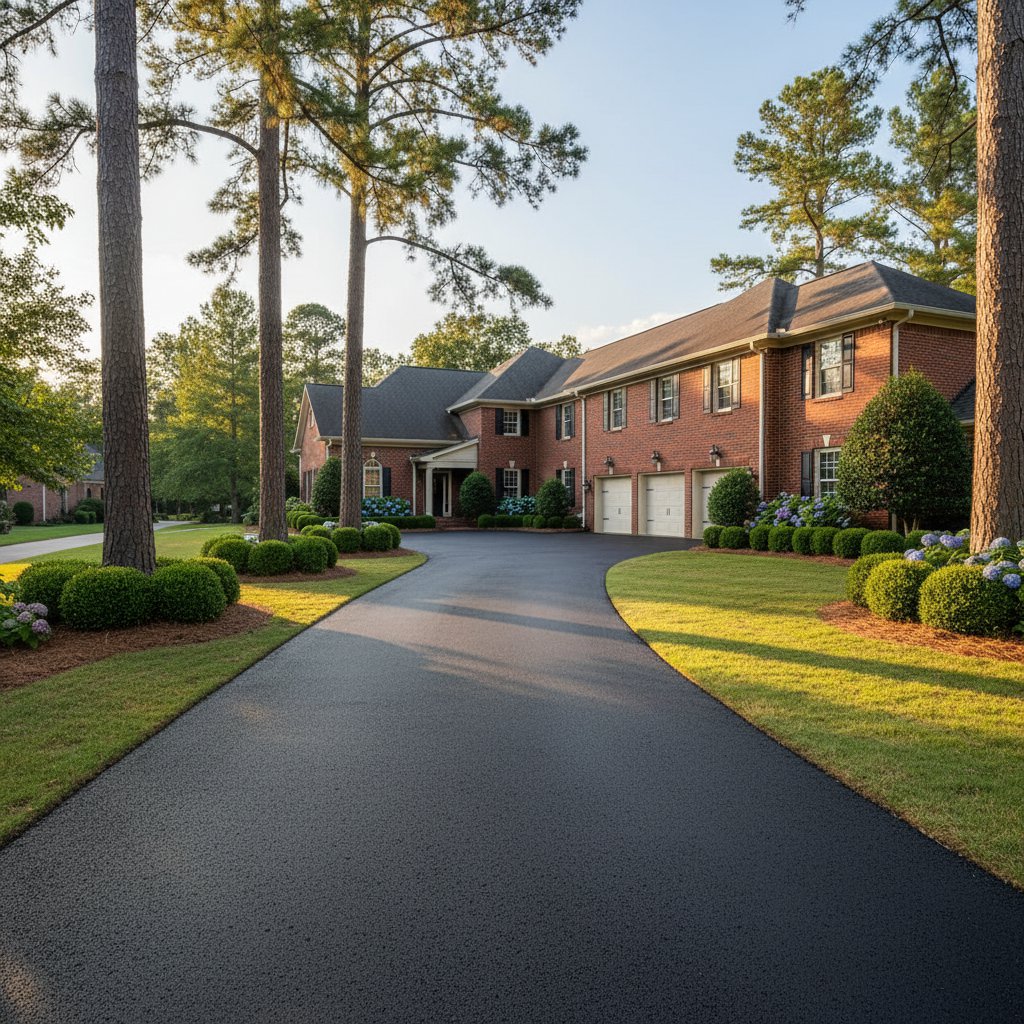
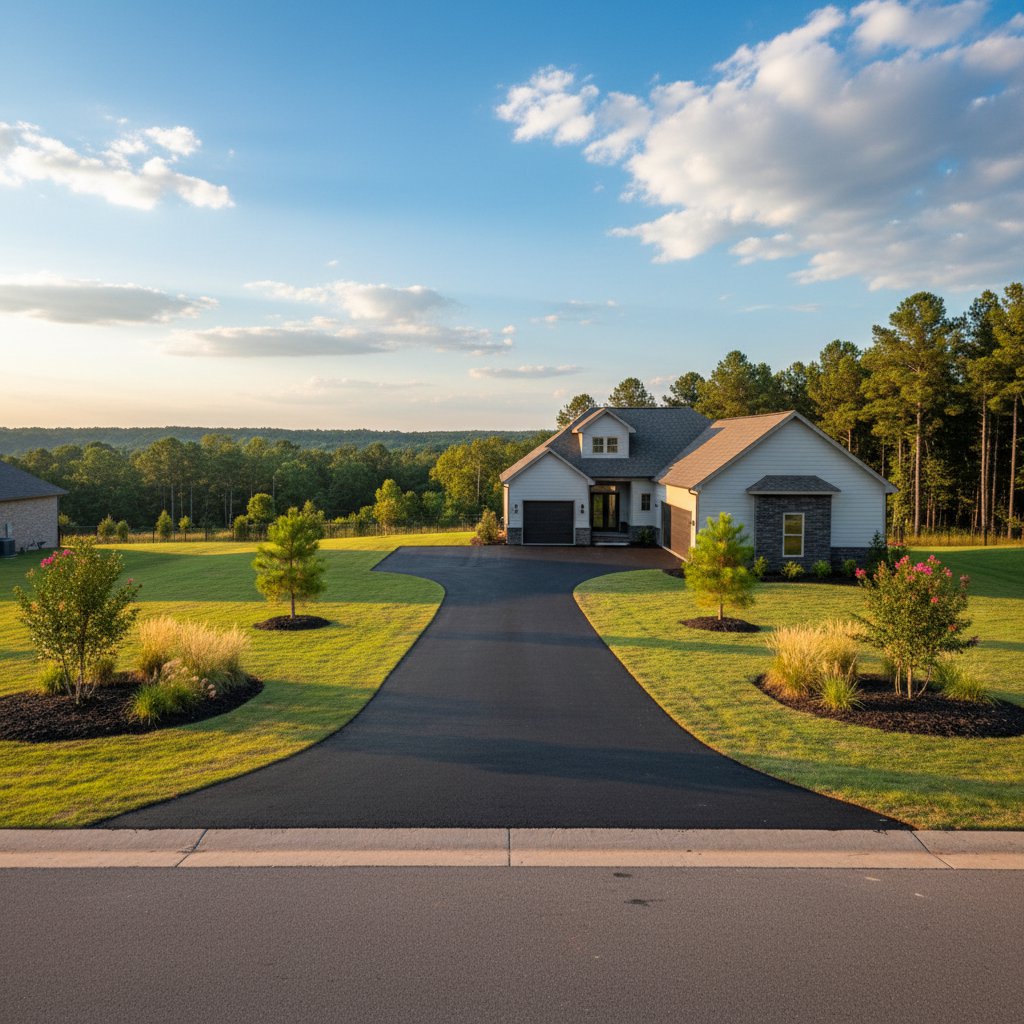
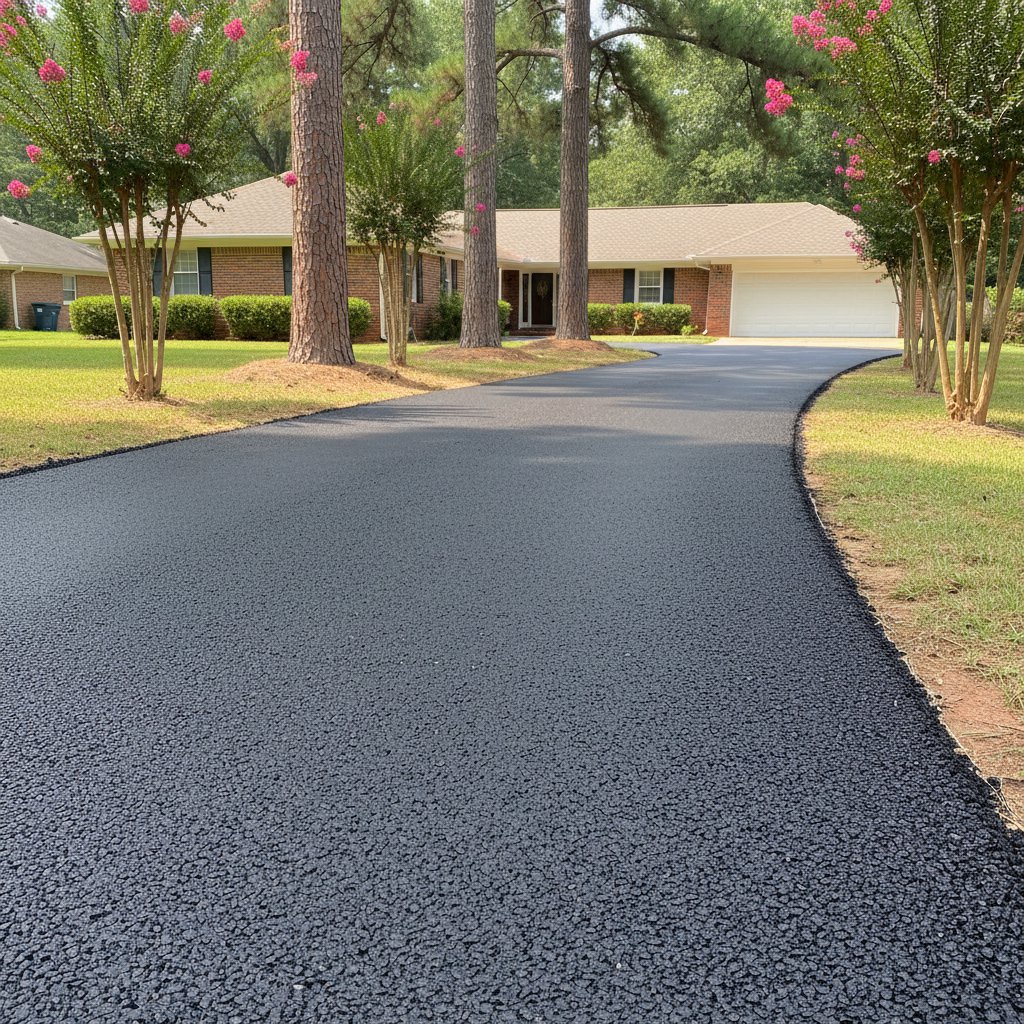
Recent Driveway Paving in Shreveport
Signs Your Driveway Needs Replacing
When patching, sealcoating, and crack filling have run out of road, these are the conditions that mean it's time for a tear-out.
Gray, Brittle, Raveling Surface
When the binder has oxidized out, the surface gives loose aggregate underfoot and looks gray-white instead of black. Sealcoat can't restore it.
Cracks Wider Than a Pencil
Cracks more than a quarter-inch wide, branching, or running the full length of the driveway mean the base is moving and crack fill won't keep up.
Sunken Sections or Birdbaths
Soft spots that pool water or sag underfoot mean the base has failed underneath — and water is accelerating the failure with every storm.
Driveway Older Than 25 Years
Past 25 years, even a maintained driveway has reached the end of useful life. The cost of patching exceeds the value of a fresh install.
How We Pave a Driveway
Four steps that take the worry out of the project.
Measure and Mark
We measure the square footage on site, mark utilities, and check the grade — including where the water needs to go off the surface.
Tear-Out and Base Prep
Old asphalt is removed, the sub-grade is regraded and compacted, and fresh aggregate base is installed and rolled to spec depth.
Hot-Mix Surface Course
Hot mix is laid with a paver at temperature, edges are hand-formed, and the roller sequence is completed before the mat cools.
Walk-Through and Cleanup
We walk the finished driveway with you, point out edge work and drainage details, sweep the site, and leave it clean.
What Our Clients Say
"Our driveway off Line Avenue had been graying and raveling for years — sun had cooked the binder out of it. They patched the base where water was pooling near the garage, laid a fresh surface, and sealcoated it the right way. Two summers in and it still looks new."

Ready for a Driveway That Lasts?
Get a free written estimate from a local paving crew that builds residential driveways the right way. We'll measure, walk the drainage, and give you a fair price with the scope spelled out.